Showing posts with label environment. Show all posts

Tuesday, November 20, 2012

Pedal for Sustainability

I survived last Sunday the 35km Tour of the Fireflies bike ride! Its an annual event wherein thousands of bikers all over the country gather to ride the streets of Metro Manila and to promote its environmental awareness campaign on clean air.

The theme of this year is "Pedal for Sustainability" a call for the government to promote biking as part of the solution in fighting climate change. The group is also asking for more bike lanes in the major streets of the city.


Bikers wearing costumes and propping their bikes are one of the unique factors of Tour of the Firefly bikeride


Even young kids join the bikeride


This is the bike that my office mate lend me :)


"Pedal for Sustainability"


Bike all the more!!!


Tuesday, October 9, 2012

whirlwind september

My September was just full of "adventure time" especially at work...


We trek the head waters of Montalban Rizal to document stories of people living near the Tayabasan river. We learned from them that their so-called "tubig linaw" (clear water) is not so clean and pure anymore. It was already a victim of pollution due to a certain industry up stream. They only hope that there will come a time where they can enjoy the crystal clear water just like how it used to be.


On the second week, is the start of the water patrol expedition of Greenpeace a 3 week long trip along the waters of Marikina to Laguna Lake. Its a joint effort together with the local groups of San Mateo and Marikina to investigate possible polluters of the river.


After that I found myself riding a 13km bike ride from Taguig-Sucat. It was not in the original plan to take the ride but it was fun :) Despite of wearing jeans and a polo I still managed to reach the finish line :)


Then on the third leg of the expedition I volunteered myself to be a zombie in a peaceful and creative protest inside the Department of Environment and Natural Resources (DENR). Straight from the airport, I was immediately transformed into a punk zombie hehe its like we all just emerged from a scene in the famous zombie series "walking dead"


Lastly, we wrap up the expedition with a serenade night of talents and thanks giving for all the hard efforts of everyone in making the trip a successful event :)


Weeh! So lucky to be part of this crazy organization from trekking,to water boats, to biking, to zombie and then to serenade hehe so much adventure in a span of 3 weeks :) Sa uulitin mga katoto!!

more stories on this site

Sunday, September 2, 2012

Responsible mining: Best Practice of the Banao Tribe


In the province of Kalinga lies the mining community called Gaang. Most of the people living in this town are from the Banao tribe, one of the gentlest tribe in the Mountain Province and a proud tribe of blacksmiths. They been mining for more than two decades now since the gold rush in the 80s. At first they use Mercury (Hg) for easy processing of gold but they notice the bad effects of it on their health and their rivers. Even a mercury seller for 15 years now gave up her business because of these effects

Since last year the Ban Toxics held a workshop for the miners about the non-mercury practice where all they need to do is to go back in the old processes by using sluice box, panning devices and just simple borax. At first they had a hard time adapting it because it takes more time to process the gold than just using mercury, but as time passes by they begin to see the benefits from it. They notice the high quality of gold that they got from this mercury-free method and they don't have to worry about getting sick anymore.

Its been a year now since the mining town of Gaang is practicing this mercury free method its still a challenge to implement it in other places but its a good start for everyone and a good sign that there is hope for a cleaner and safer future for the miners.

Wednesday, June 6, 2012

What Lies Beneath- a story on small scale mining in the Philippines


What Lies Beneath


The Philippine deposits of gold, copper, chromium and nickel are considered as the 5th largest in the world. In 2009, the Mines and Geosciences Bureau (MGB) of the Department of Environment and Natural Resources (DENR) estimated the country’s gold reserves at 5,080,785,289 tons, based accordingly on the bureau’s consolidation of resource inventory data supplied by mining companies. Forty provinces that have gold deposits practice different ways of mining gold that has been hand down from their ancestors since 3rd century.[1]

The Artisanal and Small-scale Gold Mining (ASGM) is very common to the rural areas of the Philippines because of the constant surge in the price of gold and easy way out of poverty. ASGM, which occurs in more than 70 countries, provides income to an estimated 10 - 15 million miners including 4.5 million women and 1 million children.[2] The sector produces about 500 to 800 tonnes of gold per annum, which accounts for about 20 to 30 percent of the world’s gold supply.[3] Despite of this, destruction of environment and human health is at stake.

The use of mercury (Hg) in ASGM posed a very dangerous threat to the health of the miners. It contains potent neurotoxin that impairs brain function, lowers intelligence and causes hearing loss. It also affects women in terms of miscarriages and birth defects. This element also destroys the environment by polluting freshwater bodies. Moreover, small scale mining practices such as the use of dynamite in making tunnels is one of the cause of landslides and degradation of the mountain.

This photo story will focus on the environment and health issues pose by the artisanal and small-scale gold mining practices in the Philippines and it will also showcase how the players such as the miners, townspeople and the government are dealing with it. My objective in making this story is to educate the people about the reality that small scale mining is dangerous but a kind of livelihood that is essential in the national development of the country. It aims to call on the attention of the government to regulate and supervise this kind of livelihood for the benefit of the miners and the companies.


[1] Ban Toxics report: The price of gold, 2010
[2] Module 3, Mercury Training Module, United Nations Environment Programme, 2008
[3] Export Bans and Reducing Mercury Consumption in Artisana land Small Scale Gold Mining, Kevin Telmer, University of Victoria

Thursday, February 9, 2012

Sunday, January 29, 2012

day 219-216: Fun Run!!!

Thousands of advocates from NGOs and community groups join the Anti-Coal Fun Run in Olongapo City organized by Sikad Subic a group that campaigns against the setting-up of coal fired power plants in the city.


Thursday, January 12, 2012

day 239-238: murky future?

Do you want your future drinking water to be like this?


If not then start doing something like this..


Our water is not a dumping ground stop polluting it and start protecting it!

*story on this site

Tuesday, June 28, 2011

One of a kind nature trip

Have you ever been to a nature trip in which you have to see with your own eye a nuclear power plant reactor? Well its one heck of an experience and thanks to Greenpeace I was able to have one last June 11,2011.

The trip was organized to highlight the possibility of this moth-balled nuclear plant to be a tourist spot. This facility was built during the Marcos era and faced a lot of controversial issues like safety and corruption. The person in charge of the plant even joked that this place might be jinx :) Now its undergoing another phase again but hopefully this will work fine for the good benefit of the people.

I can say that the whole tour is absolutely awesome as I quote Francis Dela Cruz, public outreach coordinator of Greenpeace, “How many people can put a photo on Facebook of themselves taken from the middle of a control room of a nuclear power plant?”


more info on BNPP turning tourism
http://bit.ly/kZAoGS
http://bit.ly/lhjfiD

Wednesday, June 15, 2011

happy mordor:coron trip

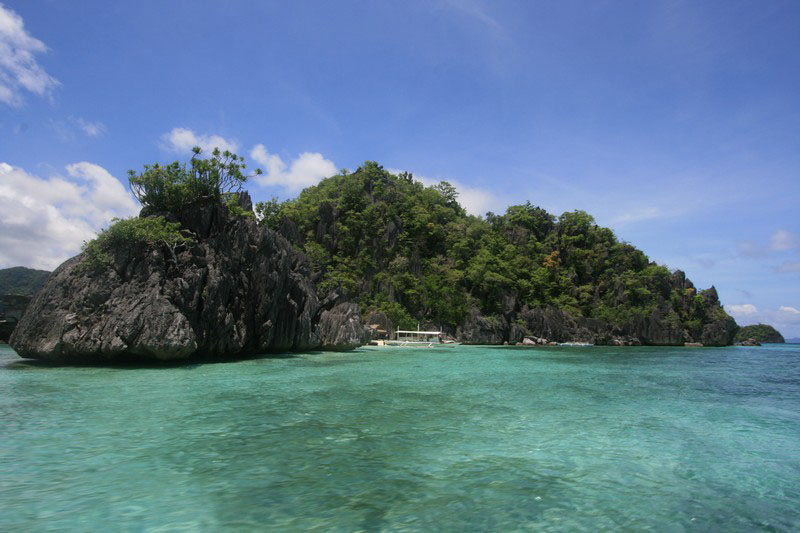
My friend and I went to Coron last week of May after our defense in ACFJ . Coron island is part of the Calamian group of islands in the northern part of Palawan, Philippines. Its a wedge-shaped limestone island, surrounded by white beaches and seven lakes which are very popular diving and snorkel spot for the tourist.

Our itinerary for this trip is to sleep,bike and swim :). We arrived on the rainy Sunday morning and just slept for the whole day. During the night we took a very relaxing bath at the Maquinit Hot Spring.

The following day we were blessed by a good weather, we rented a mountain bike (25 pesos per hour rent) and just explored around the town proper, market and pier. Its an exhausted day but fun :)


The next 2 days are swimming days weeh! We went island hoping and swim to fresh water lakes, white sand beaches and snorkel in coral gardens.


The beauty that we witness for the past few days reminds me of how lucky we are to have these kind of places in our country. As the saying goes, "take nothing but photos, leave nothing but footprints", we must give our share to protect it by being responsible tourist. Lets not leave our trash on the place or vandalize the place. Even through these small efforts we can make a big difference and preserve these wonders for the next generation.


*for island tour trips check this site

Tuesday, April 26, 2011

food for thought


hehe I'm the last female seiyuu (voice actor :)

Sunday, March 27, 2011

let's go beyond switching off let's aim for a [R]evolution


Greenpeace volunteers together with members of the Earth Ministry of our Lady of Remedies Parish (OLRP) and Greak Work Movement lighted up sky lanterns and LED (light emitting diode)powered sign with different messages on clean and efficient energy.Greenpeace is promoting an Energy [R]evolution a massive uptake of Renewable Energy (RE), coupled with comprehensive Energy Efficiency (EE) measures to fight climate change during the Earth Hour celebration last 26 March 2011.(c)AC Dimatatac/Greenpeace

Wednesday, December 1, 2010

Warriors of the Rainbow


“There will come a time when the Earth grows sick, and when it does, a tribe will gather from all the cultures of the World who believe in deed and not in words. They will work to heal it…they will be known as the ‘Warriors of the Rainbow’”


For the last two weeks of November, I was pretty much hooked up in my work because our flagship Rainbow Warrior visited the Philippines for its Turn the Tide Ship Tour. This tour is also her last visit in the country because she's scheduled to be decommissioned next year.

The campaign is focused on the issue of climate change, calling for action to the greatest threat to humankind and to offer solutions to this problem by switching to renewable energy. (50% Renewable Energy by 2020)

The first port call was General Santos City wherein a proposed coal power plant is to be built in a small town of Maasim. We held a solidarity activity there with the community and was overwhelmed on how thankful the folks are because of our visit. It was just a one-day activity but for me it was the most fulfilling moment in this whole ship tour.

After four days of sailing from Gensan, Rainbow Warrior arrived safe and sound in Manila last week, Saturday morning. Unfortunately, it was not able to dock near Harbor Square Manila but still the Warrior was visible.

The Manila leg is focused on the activities held in the BGY10 (Barangay Greenpeace Year 10) such as bike ride, fora, exhibits, demonstrations of renewable energy applications, environment workshops for children as well as adults. This 10th year anniversary of Greenpeace Southeast Asia also highlighted the "Turn The Tide" Concert featuring popular and independent bands and artists from the local music scene.

On Sunday, we held a two simultaneous event, Waste Audit in Manila Bay with GAIA (Global Alliance for Incinerator Alternatives) and Energy [R]evolution Bike Ride. It was very tiring to invite media for two events but all ends well :)

The final event of the tour is a solemn memorial for Crizel, the little girl who died on the Rainbow Warrior 10 years ago. She was afflicted with leukemia due to exposure from toxic wastes in a former US military base. Despite the dark clouds and slight rain, we were still able to finish the event in one hour. Francis and Beau led the solemn memorial for Crizel and some of the crew and volunteers like Hetty and Danny shared their stories about that first trip of the Warrior in the country. (Crizel)


It's quite a tour that's full of new insights, hardships and inspiration. I'm hoping to experience more kick ass and compelling activities for the coming year.

Friday, October 15, 2010

World Blog Action Day:Water

Laguna Lake is consider as the third largest lake in Southeast Asia.It is a navigation lane for passenger boats, source of water for a nearby hydroelectric power plant, food support for the growing duck industry, aquaculture, recreation, fishery, flood control, source of irrigation water and a "virtual" cistern for domestic, agricultural, and industrial effluents.

Now the lake is now the current source of drinking water of Muntinlupa City. The water is being treated by the water treatment plant of Maynilad Water Services Inc.

But the country's biggest freshwater body is still being threatened by industrial pollution.We still need to act and do something in order to protect this source of potable water before its too late to save it.

Tuesday, September 21, 2010

The 'So-Coal' network


Let's all tell facebook to stop using coal and revert to renewable energy, click on this site

Friday, September 3, 2010

Ano ang nasa tubig mo?


Greenpeace volunteers fight the hard pouring rain in the busy street of Philcoa Quezon City to campaign for the right to know of the water quality of the people.Three of them wear sandwich boards and the rest are handling out stickers, all of it with information about water pollution. They give them to the people and passengers of public vehicles such as jeepneys and taxis. They engage the public about the campaign and try to explain how they can help. The activity last for about an hour and despite of the weather everyone enjoy it and they want to repeat the activity in other venues.

To know more about the campaign log on to "Ano ang nasa tubig mo?" and learn more on how to spread the word and help in the public awareness campaign on water pollution.

Sunday, August 22, 2010

nukes roadshow-pangasinan leg

Last week, I joined Greenpeace on its Nukes Roadshow, a public awareness tour about the dangers of nuclear energy and [e]nergy revolution a campaign on use of renewable energy sources and energy efficiency practices, to the provinces that pass a resolution allowing nuclear power plants in their area.


(c)AC Dimatatac


(c)AC Dimatatac

Our first stop is Pangasinan the first province that passed a resolution (proposed by Congressman Mark Conjuangco) that will allow construction of two nuclear power plants in the area. The group set up their exhibit in the San Fabian church and Pangasinan State University in Lingayen to engage the public for almost a week.


(c)AC Dimatatac


(c)AC Dimatatac

Most of the people that we've talked to are not aware about the resolution, they are even shock that their board members will agree on this. Some of them are familiar about the dangerous effect of nuclear energy. When we asked them if they know about renewable energy they said yes and pointed out the Bangui wind farm in Ilocos as an example.


(c)AC Dimatatac

At the end of our trip we gathered more than a thousand signatures, written in paper pin wheels, which we will deliver to President Noynoy Aquino calling his support in promoting renewable energy instead of nuclear. Its a good experience engaging the people and getting their support on something that the future generations will surely benefit.

Monday, March 29, 2010

earth hour 2010


(c)Greenpeace/AC Dimatatac

Last March 27, we celebrated Earth Hour together with the community in Malate Church. Greenpeace volunteers lighted up an LED (light emitting diode)powered sign with the words "Renewable Energy, Energy Efficiency" to highlight the need for a Energy Revolution as a key solution to climate change.

Also during this time more than 1,000 cities and municipalities in the Philippines have taken part in Earth Hour, the largest number of any country or territory participating in this activity according to the organizer.

drought part 2


(c)AC Dimatatac


Isabela is the second largest rice producing province in the Philippines and the first when it comes to corn production. As early as February of this year, several towns were declared under the state of calamity due to extreme El Nino that brought severe drought in their farmlands. About 3 billion worth of damage crops have been reported as of March 2010. Almost all of the rice and corn crops planted last December harvested and if it did, it was either burnt for the corns or in the case of rice it just produced ipa or empty grains.

According to Mr. Emiliano Camba, manager of the Farmers Information Technology Services
(FITS) and the Municipality Agriculturists Officer (MAO) of San Mateo, one of the contributing factors to the problem they are facing right now is the type of soil in Isabela. Most farmlands in this province is Sandy Loam, the kind that must be maintained with water every 24 hours and because there is no water to irrigate their crops, they are unable to harvest it. Meanwhile, in other towns like Alicia and Santiago, they have Clay Loam, or the type of soil that can survive for a week without water. This has lessened the impact on their crops.

San Mateo, is one of the areas heavily affected by the calamity. Recognized in 2008, this town is also known as the Agro-Ecological Destination in Isabela. About 8,400 hectares of farmland were planted with rice and 792 hectares for corn. They rely on the weekly distribution of water for their irrigation from Magat Dam, but since the Dam was closed they haven’t had enough water supply for their farms. The Department of Agriculture (DA) provided them with 70 water pumps which were distributed evenly to those heavily affected and to those who still have water to pump. Despite the efforts, the pumps came too late --- there was no water to pump.

For the farmers who were able to harvest their crops, they reported huge losses from their average of 6.2 to 7 yield which can harvest at least 300 bags per hectare. Since the drought, they were only able to produce 70-80 bags, a far cry from the usual 300 bags. According to Mr. Lito Lazaro, a farmer in Baranggay Salinungan his 1 ½ hectares farm of rice can produce up to an average of 50 bags per harvest but now it’s gone down to 20. He can only sell his rice for P14 per kilo and P10 for the poorer quality. In Macarasat Piqaño, Captain Binerando Gamiao showed us his corn farm and its crops which are smaller than the normal size and some already burnt. He said because of the poor quality, he can only sell it for feeds – and not even all of it.

Grace Padaca, the governor of Isabela extended her help to those affected by giving out 5 kilos of rice to the farmers in the most affected areas. They gave rice in two baranggays in Naguillan, Minanga and Minallo.

Mrs. Lydia Botten, a resident of Minanga for 45 years, was able to harvest around 25 bags both for her rice and corn crops which is only ¼ of her regular harvest, a staggering decrease from her average harvest of 100 bags. In purok 7, Sitio Pikot the farmers were not able to harvest anything. Meanwhile, Brgy. Minallo suffered the most as the irrigation did not reach their area. One of the farmers, Mr. Augusto Villamor said his usual 100 bags of yellow corn feeds went down to only 20 bags. Normally, he can sell his crop for P16 per kilo but now he can only sell it for P12.50.

Meanwhile, people in Baranggay Malalatang Tungi in Reina Mercedes were hit hardest by El Niño.According to Mrs. Elvie Manuel, wife of the Baranggay Captain, they unable to harvest
anything from their rice land and only a few from their corn land. The type of soil in this area is Sandy Loam, so even if they are geographically close to the Magat River, their crops weren’t able to survive the drought.

This really shows how devastated the farm lands of Isabela are and how farmers are faced with a difficult situation that leaves with them with practically nothing to earn from. Despite the help form both national and local government, it is not enough to help them survive the crisis of El Niño. They have not given up, for they continue to hope and pray for rain to save them from the drought.

drought part 1


(c)AC Dimatatac


Magat Dam started its operation in 1983. It serves as a source of irrigation in Northern Luzon farmlands and as a Hydro power Plant that feeds up to 360 MW of power to the Metro Manila power grid. It's irrigation system is handled by the National Irrigation Administration (NIA) and the hydro power part by the National Power Corporation(NAPOCOR). It was privatize last 2004 and bought by Aboitiz Power Corporation.

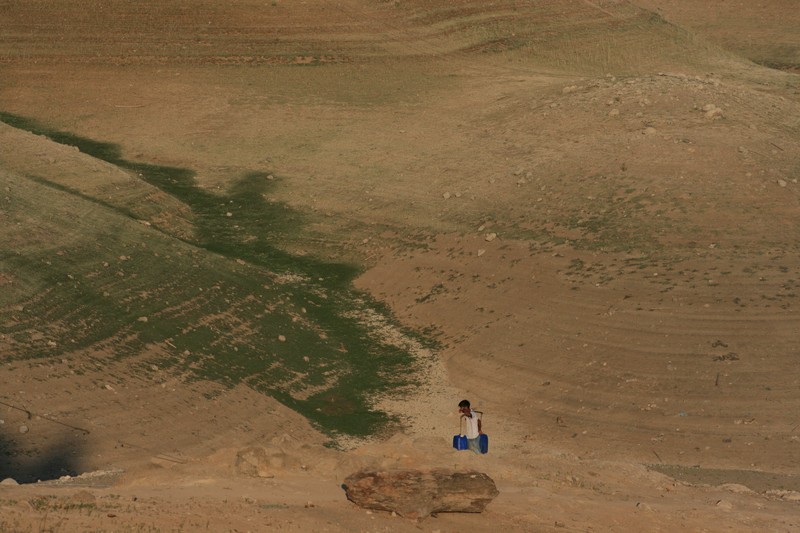
The Magat Dam is surrounded by three provinces: Isabela, Ifugao and Nueva Viscaya provinces which mostly consists of farmlands that rely heavily on the Dam's irrigation system. Due to El Nino which has brought severe drought since the last weeks of January 2010, the dam was forced to temporary shut down last March 10, 2010. It's water level is down to 150 meters which is already beyond the critical point of 160 meters. According to Mr. Macario Tamayo, one of the security guards in the Dam, this is below the normal levels during summer which is around 170-180 m. The water level is so low that it doesn't even reach the gradation level signs located in the spillway area. The tricycles (a three-wheeled vehicle) which plies the topmost part of the dam, can now go down to fetch people. They also erected a temporary food stand in the area which was normally covered by water.

Aside from the farmers, there are also floating houses heavily affected by the dry spell. These houses have fish cages that nurture fish such as bigheads and tilapias, which they sell in the market of Ramon and other nearby municipalities. Due to the low water level of the dam their livelihood has suffered drastically from the mud brought by the siltation and soil erosion from the lack of trees in the watershed area of the Dam.

According to Mrs. Cathy Tumundong, a resident of one of the floating houses for 9 years already and who also owns some of the fish cages, this is not the first time that they experienced drought in the Dam but she stressed that this was the most severe case. They had a hard time harvesting their cages because the fish which they nurture for about 4-5 months is now being contaminated by thick mud. They also experienced massive fish kills last February 2010. Despite the situation, she can still sell some of her fish for about 50 pesos per kilo but the price depends on the size of the catch. She added that some of the fisher folks have already transferred to other areas in hopes of a better livelihood. It was also noticeable that some of the houses no longer float because the drought has dried up a great portion of the area. She then emphasized that the problem is not just caused by El Nino, but because the Dam released a large amount of water during the Pepeng storm late last year. The authorities didn't want them to experience an overflow as what happened in Pangasinan, which is why they let out more than the water amount that should have been released. According to the authorities, however, no such thing occurred. We don’t know what really happened, but one thing’s for sure, Magat Dam and the people relying on it are in a very dangerous and delicate situation. As of now, the only solution for this is rain --- which is unlikely to happen anytime soon.

Monday, January 25, 2010

in solidarity

(c)Greenpeace/AC Dimatatac

(c)Greenpeace/AC Dimatatac


(c)Greenpeace/AC Dimatatac

Last January 22, 2010, Greenpeace activists from Thailand, Philippines and Indonesia stage a rally in front of the US Embassy in Bangkok Thailand to give out a trophy of award to President Barack Obama as a CO2 Champions together with Prime Ministers Stephen Harper of Canada and Kevin Rudd of Australia to mark their failure in Copenhagen.

“Greenpeace calls upon all countries to continue negotiations on a fair, ambitious and legally binding agreement within the UNFCCC in order to adopt such a deal at the next climate summit in Mexico at the end of this year,” said Tara Buakamsri, Greenpeace Southeast Asia Campaign Manager. “Work has to be begin now in order to achieve this. Otherwise Mexico risks repeating the last-night brinkmanship which led to the failure of Copenhagen. (see more story in http://www.greenpeace.org/seasia/en/news/greenpeace-awards-medals-of-sh)